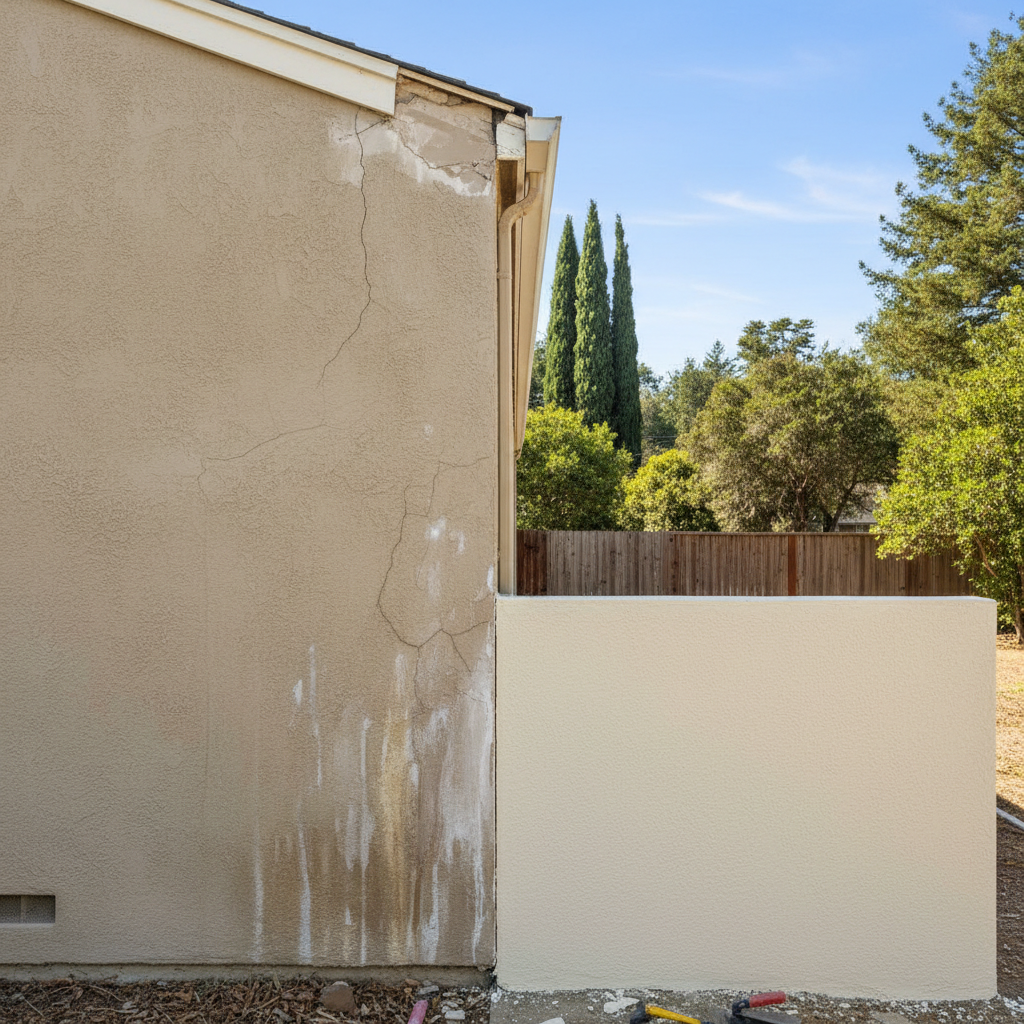
Alright, let's talk stucco. If you're looking at putting new stucco on your house, or maybe repairing an old section, you've probably heard about a couple of different ways to do it. The big debate these days often comes down to traditional 3-coat stucco versus the newer 1-coat (or 'one-coat') systems. As someone who's been doing this work in Santa Cruz for years, I've seen both in action, and they each have their place. But for homeowners, understanding the real differences is key to making a good decision.
What's the Deal with Traditional 3-Coat Stucco?
This is the classic, time-tested method. It's exactly what it sounds like: three distinct layers applied over a lath (usually wire mesh) that's attached to your wall. First, you get a scratch coat, which is pushed into the lath and scratched horizontally to give the next layer something to grab onto. Then comes the brown coat, which builds up the thickness and gets leveled out. Finally, there's the finish coat, which is what you see – the color and texture.
Why do we do it this way? Well, for one, it's incredibly robust. Each layer has time to cure, and the total thickness (usually about 7/8ths of an inch) makes for a very strong, impact-resistant wall. It's also fantastic for moisture management. Those multiple layers create a dense, monolithic shell that's really good at keeping water out, which is a big deal here in Santa Cruz, especially with our damp winters and occasional heavy fogs rolling in off the bay. It's a tried-and-true system that's been around for centuries, and when done right, it lasts a very long time.
And the 1-Coat Stucco System?
The 1-coat system, sometimes called 'synthetic' stucco or 'EIFS' (though EIFS is a bit different and usually refers to exterior insulation and finish systems), is a more modern approach. The name '1-coat' is a little misleading, actually. It's not just one layer. You still have a lath, but then a single, thicker base coat is applied, which typically includes fibers and polymers for strength and flexibility. This base coat is often applied over a foam board insulation, and then a finish coat goes on top. So, it's more like a 2-coat system over insulation, or a single thick base coat plus a finish coat over lath.
The main idea behind 1-coat is efficiency. It's faster to apply because you're doing fewer distinct layers, which can mean lower labor costs. It's also lighter weight and can offer better insulation properties if applied over foam board. The polymers in the mix make it more flexible, which some folks argue helps prevent cracking, especially in areas with minor settling. It's often used in new construction where speed is a priority.
Cost, Durability, Maintenance, and Looks: The Breakdown
Let's get down to what really matters for your wallet and your home.
- Cost: Generally, 1-coat systems tend to be a bit cheaper upfront due to reduced labor time. Less drying time between coats means crews can move faster. However, this isn't always a huge difference, especially if you're talking about a smaller job. For Santa Cruz Stucco & Plastering, we price based on the job's complexity, not just the system.
- Durability: Traditional 3-coat, in my experience, is the king here. Its sheer mass and density make it incredibly durable against physical impacts. It's a solid, rock-hard shell. 1-coat systems are flexible, which is good for minor movement, but they can be more susceptible to impact damage if they're thinner or if the underlying foam isn't robust.
- Moisture Management: This is where I lean heavily towards traditional. The multiple layers of cement plaster in a 3-coat system create a very effective barrier against water intrusion. With 1-coat, if water gets behind that single base layer, it can sometimes get trapped, especially if the flashing details aren't absolutely perfect. I've seen more moisture issues with poorly installed 1-coat systems than with traditional stucco, particularly in older homes in places like the Live Oak area where homes might settle a bit over time and create tiny pathways for water.
- Maintenance: Both systems are relatively low maintenance. Keep them clean, repair cracks promptly. The key difference comes if you get a crack. With 3-coat, a crack usually means a surface issue. With 1-coat, a crack could potentially compromise the entire moisture barrier more easily.
- Appearance: Both can achieve a wide range of textures and colors. You won't typically be able to tell the difference just by looking at the finish coat. The aesthetic choice is yours, regardless of the system underneath.
My Recommendation for Santa Cruz Homeowners
Look, both systems have their pros. If you're building a brand new, highly insulated home and speed is paramount, a well-installed 1-coat system with excellent flashing and drainage details can work. But for the vast majority of homeowners in Santa Cruz, especially if you're renovating an existing home or want the absolute best long-term protection, I'm going to recommend traditional 3-coat stucco every time.
Why? Because of our climate. We get a lot of moisture. The robust, multi-layered defense of traditional stucco against water is just superior. It's a proven system that's stood the test of time, and its density provides excellent protection against the elements and everyday wear and tear. You're investing in your home for the long haul, and you want a system that's going to protect that investment for decades.
It might take a little longer to install, and the initial cost might be slightly higher, but the peace of mind and the proven performance of traditional 3-coat stucco are worth it. When you're dealing with something as critical as your home's exterior envelope, you don't want to cut corners. Give us a call at Santa Cruz Stucco & Plastering if you want to talk through your specific project. We're happy to walk you through the options and help you make the right choice for your home.